
Setting Up Tactical Traps for Lower-Level Engines
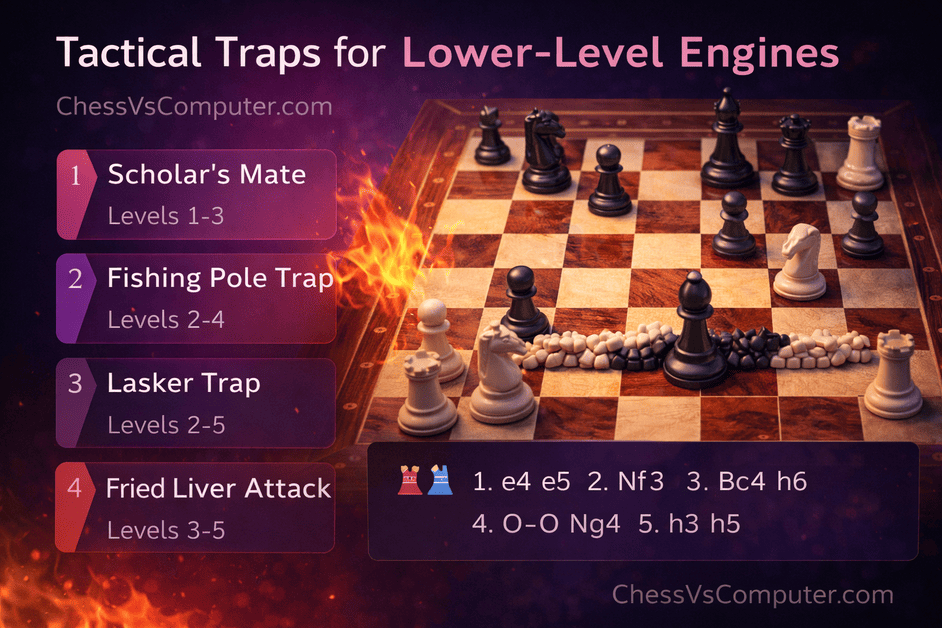
While top-level engines are invincible, lower-level engines possess exploitable weaknesses. Understanding how difficulty levels work allows you to set systematic traps when you play chess against the computer.
Engines like Stockfish Level 3 might limit their search depth to 8-10 plies. This creates a "calculation horizon." If a trap takes 12 moves to spring, the engine literally cannot see it coming.
Proven Traps by Level
The Fishing Pole Trap
To use this on ChessVsComputer.com, you must play 6...h5 with conviction. It looks like a blunder to a low-level engine, which is why it works.
The Sequence
As you progress to Level 8, these traps fail. But mastering them teaches you tactical vision that serves you well against any opponent.
Apply These Strategies Instantly
Don't just read about beating the engine—do it. Challenge Stockfish now on ChessVsComputer.
Play vs Computer