
Time Management Against Computer Opponents
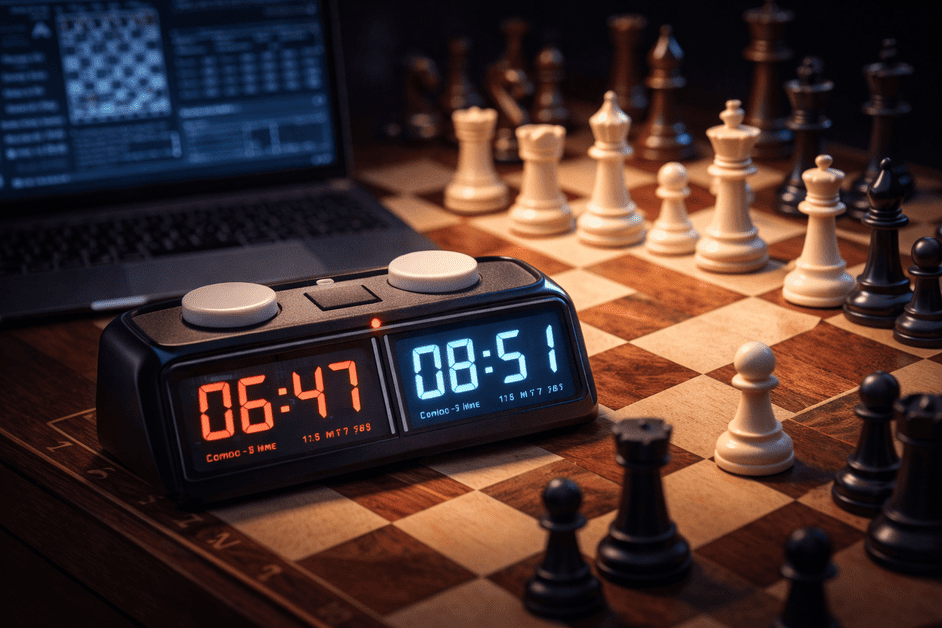
One of the most critical aspects of playing against computer opponents is strategic clock management. Unlike humans who panic in time scrambles, engines like Stockfish maintain perfect accuracy instantly. This requires a rethinking of how you allocate time when you challenge the computer.
Saving time for the endgame is a fatal flaw against silicon opponents. Engines demonstrate absolute superiority in endgames via tablebases. Spending minimal time in the opening—where you have the best chance to outplay the engine—squanders your opportunities.
The 60-30-10 Principle
For the best results when trying to beat chess engines, try this distribution:
Invest heavily here to navigate traps and achieve favorable structures.
Moderate investment for piece trades and pawn breaks.
Minimal time. Winning positions need basic technique; lost ones are unsaveable.
In Practice
In a 15-minute game on ChessVsComputer.com, invest 9 minutes in the first 20 moves. This allows you to calculate deeply when the position is most complex and the engine's horizon effect is most exploitable.
Critical Moment: The Opening
Don't play automatically. That 90-second investment on move 7 is worth far more than having extra time on move 45 in a decided position.
Mastering the clock is about investing thinking time where it creates maximum strategic advantage. This skill separates players who consistently lose from those who compete effectively against the machine.
Apply These Strategies Instantly
Don't just read about beating the engine—do it. Challenge Stockfish now on ChessVsComputer.
Play vs Computer