
Neural Network Engines vs Traditional Engines
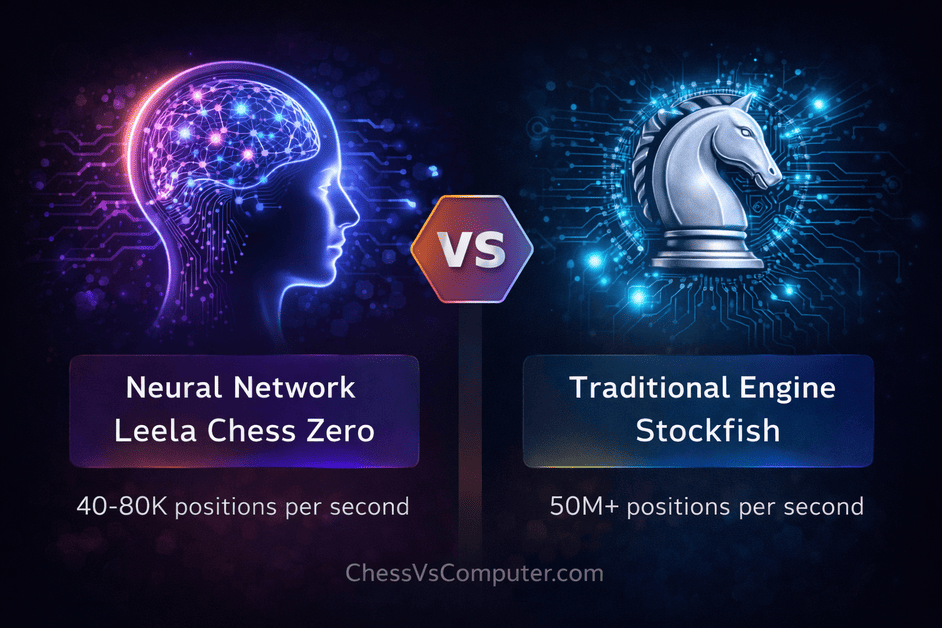
The landscape of computer chess has been revolutionized by neural networks like Leela Chess Zero (Lc0). Understanding the difference between these AI-driven engines and traditional brute-force engines like Stockfish changes how you prepare.
Traditional engines use alpha-beta search—calculating millions of positions per second. Neural networks use pattern recognition, evaluating fewer positions but with "human-like" intuition (albeit superhuman accuracy). This creates distinct strengths and weaknesses.
Architectural Differences
Stockfish is a calculator; Leela is an intuitive master. Stockfish might search 50 million positions per second, while Leela searches only 50,000, relying on its deep understanding of each position.
Stockfish (Alpha-Beta)
- Brute-force: Examines millions of variations.
- Tactical: Dominates positions with forcing sequences.
- Precision: Never misses combinations within depth.
Leela (Neural Net)
- Pattern AI: Evaluates using learned patterns.
- Positional: Excels in strategic maneuvering.
- Vision: Sees long-term plans clearly.
Strategic Tailoring
When you play Stockfish online, choose openings that lead to closed positions, like the French Defense. This minimizes its tactical calculation advantage.
Against Neural Networks like Leela, embrace chaos. The King's Gambit or sharp Sicilians create immediate tactical complications where calculation depth matters most—an area where traditional engines are slightly superior to Neural Nets.
By understanding these architectures, you can tailor your game plan. Don't treat all computer opponents the same; exploit the specific nature of their thinking.
Apply These Strategies Instantly
Don't just read about beating the engine—do it. Challenge Stockfish now on ChessVsComputer.
Play vs Computer